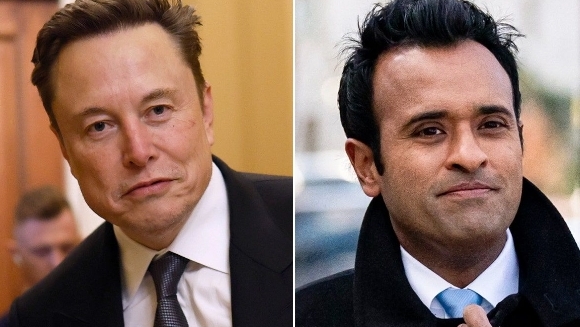


In a significant development within the Trump-aligned political sphere, influential figures Elon Musk and Vivek Ramaswamy have sparked an intra-MAGA (Make America Great Again) battle by putting forward proposals to increase immigration visas for high-skill workers. Both Musk, the tech magnate behind companies like Tesla and SpaceX, and Ramaswamy, a prominent entrepreneur and political figure, have become key advocates for expanding the pathways for highly skilled immigrants to enter the United States, a stance that has stirred significant debate within the broader conservative movement.
Musk, a staunch proponent of technological innovation and global talent, has long emphasized the importance of maintaining open channels for skilled workers in fields such as engineering, software development, and healthcare. For Musk, the success of his companies, which rely heavily on cutting-edge technology and talent from all over the world, has underscored the critical role that foreign workers play in driving U.S. economic growth. His push for expanded immigration opportunities for highly skilled workers reflects a broader vision of a more inclusive and globalized workforce that could help the United States retain its competitive edge in a rapidly evolving global economy.
Ramaswamy, on the other hand, has positioned himself as a thought leader within the political sphere, advocating for policy reforms that will encourage a thriving entrepreneurial environment and ensure America’s technological dominance on the world stage. Ramaswamy’s call for expanding visas for high-skilled workers, particularly in industries like biotechnology, engineering, and artificial intelligence, echoes the views of many business leaders who argue that the country’s immigration policies should be more flexible in order to attract and retain top-tier talent. For Ramaswamy, these changes are essential to maintaining America’s position as a global leader in innovation and economic advancement.
Despite their shared support for an increase in high-skill immigration visas, their proposals have ignited division within the MAGA movement, revealing the complexities of the modern conservative immigration debate. Traditional conservatives and some factions within the MAGA base remain staunchly opposed to any form of immigration expansion, viewing it as a potential threat to American jobs and a challenge to national security. This faction of the conservative movement has long advocated for a more restrictive approach to immigration, focusing on securing borders and curbing the flow of both low-skill and high-skill workers into the U.S.
The intra-MAGA battle has raised important questions about the future direction of the conservative movement on immigration, particularly as it pertains to the priorities of Trump’s base and the evolving demands of the U.S. economy. Critics argue that proposals to increase immigration for high-skill workers could be seen as a contradiction to the populist rhetoric that has characterized Trump’s previous campaigns. These critics assert that expanding immigration visas, even for highly skilled workers, could undermine American workers by displacing them or driving down wages.
On the other hand, proponents of expanded high-skill immigration argue that such changes are vital for the U.S. to continue its global leadership in technology and innovation. They contend that in order for the United States to remain a leader in industries like artificial intelligence, biotechnology, and engineering, it needs to have access to the best and brightest minds from around the world. These industries rely on a diverse, highly educated, and highly skilled workforce that often exceeds what the U.S. educational system can provide domestically.
Moreover, supporters of high-skill immigration assert that foreign talent is often essential for the success of U.S.-based companies. These workers contribute not only to the advancement of technology but also to the creation of jobs for Americans, as foreign workers often drive the expansion of U.S. companies. Additionally, industries in fields like software engineering, space exploration, and medicine, where talent shortages are prevalent, benefit from immigration policies that facilitate the hiring of skilled workers from abroad.
This ideological clash within the MAGA movement reflects a broader tension in conservative thought about how best to address immigration while balancing national security, job protection for American citizens, and economic growth. It also highlights the complexity of crafting an immigration policy that resonates with all factions of the Republican base, especially as the U.S. economy becomes increasingly dependent on high-skill labor in emerging industries.
In conclusion, the proposals put forward by Musk and Ramaswamy to expand immigration visas for high-skill workers have ignited an internal debate within the MAGA movement, with deep divides over the role of immigration in securing America’s future. As these discussions unfold, they will likely shape the direction of U.S. immigration policy and influence the political landscape in the years to come. The debate serves as a reminder of the difficult balance that must be struck between ensuring national security, protecting American jobs, and fostering innovation in an increasingly interconnected world.
“Musk and Ramaswamy Spark Intra-MAGA Debate with Proposals to Expand High-Skill Immigration Visas”