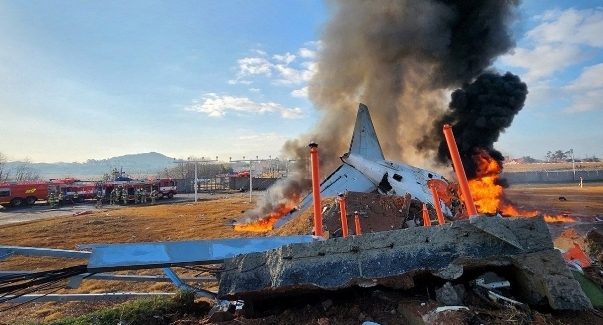


A tragic aviation accident occurred in South Korea when a Jeju Air flight skidded off the runway and collided with a concrete fence, leading to the loss of 179 lives. The incident was reported by the Associated Press, which cited information provided by the country’s National Fire Agency (NFA). This devastating event highlights the severe consequences of accidents in the aviation industry, raising questions about safety measures and operational protocols.
The accident reportedly took place during a landing attempt at a South Korean airport. While the exact circumstances of the crash are still under investigation, preliminary reports suggest that adverse conditions or potential mechanical issues may have played a role in the tragedy. When the aircraft veered off course and struck the concrete barrier, the impact was catastrophic, resulting in the loss of life and destruction of the plane.
The scale of the disaster has shocked the nation and drawn attention from the international community. Families and friends of the victims are grieving this unimaginable loss, while authorities are working to determine what caused the accident and how such incidents can be prevented in the future. The National Fire Agency, along with other emergency responders, rushed to the scene to assist with rescue and recovery operations. Despite their swift action, the severity of the crash left no survivors among the 179 passengers and crew members on board.
Aviation experts and investigators are expected to examine several factors in their inquiry, including weather conditions, pilot performance, air traffic control communications, and the aircraft’s maintenance records. The findings from this investigation will likely have far-reaching implications for Jeju Air and the broader aviation industry. As safety is a top priority for airlines worldwide, such incidents often lead to changes in policies, training programs, and operational standards to prevent similar tragedies in the future.
The aftermath of this accident has also sparked discussions about the design and infrastructure of airports in South Korea. Some critics are questioning whether the runway and surrounding areas met international safety standards. Runway excursions, such as the one that occurred in this case, can sometimes be mitigated by features like extended safety zones or specialized arrestor systems designed to halt an aircraft’s movement safely in emergencies.
As the investigation progresses, Jeju Air has expressed its condolences to the families of those affected and pledged to cooperate fully with authorities. The airline has a relatively strong safety record, making this incident particularly shocking for its regular passengers and aviation analysts. However, accidents like this serve as a grim reminder that even carriers with good reputations are not immune to unforeseen disasters.
The human impact of this tragedy cannot be overstated. The loss of 179 lives has left a deep void in countless families and communities. In response, support services, including grief counseling and financial aid, are being offered to the victims’ families. Additionally, many people across South Korea and beyond are paying tribute to the victims by holding memorials and moments of silence.
This disaster also emphasizes the importance of continuous improvement in aviation safety. While flying remains one of the safest modes of transportation, incidents like this highlight vulnerabilities that must be addressed. Airlines, regulators, and manufacturers must work together to identify risks and implement measures that can save lives in the future.
In the wake of this accident, it is hoped that the lessons learned will help prevent similar tragedies and strengthen the global commitment to aviation safety. While the pain and sorrow from this event are immeasurable, the pursuit of answers and accountability may eventually bring some closure to the grieving families and help restore public confidence in air travel.
“Tragedy in South Korea: Jeju Air Flight Skids Off Runway, Claiming 179 Lives”