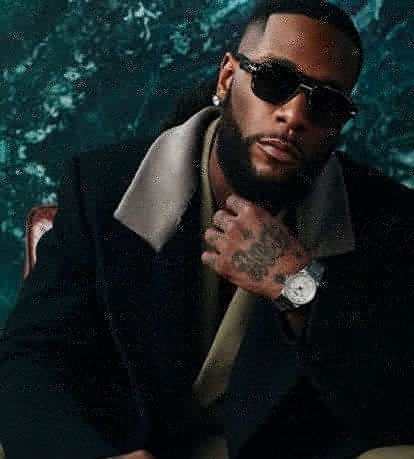


Cubana Chief Priest, a well-known Nigerian socialite and entrepreneur, recently stirred up public interest with his bold comments regarding his relationship with his family. His statement came after Burna Boy, a globally recognized Nigerian musician, reportedly gifted $30,000 to a man who was widely assumed to be Cubana Chief Priest’s brother. The public’s assumption about the family ties was quickly fueled by the association between Cubana Chief Priest and Burna Boy, as both are influential figures within Nigeria’s entertainment industry. However, in an unexpected move, Cubana Chief Priest clarified the situation with a direct and surprising remark: “I have only one biological brother and two kid sisters. Regardless, I owe them nothing.”
This statement has drawn considerable attention and sparked conversations across social media and news platforms. Cubana Chief Priest’s declaration was seen as a firm response to the public’s assumption that the man receiving the $30,000 gift was indeed his brother. The gift from Burna Boy was a public display of generosity that seemed to signify a close personal relationship between him and the individual involved, further intensifying speculation. Given Burna Boy’s status as a philanthropist and someone known for his grand gestures, the gift was interpreted by many as an indication of a strong bond, whether familial or professional, between the two men.
However, Cubana Chief Priest’s comments revealed a different perspective on the situation. By stating that he owed nothing to his siblings, he seemed to challenge traditional notions of family responsibility and the expectations of public figures to act in a certain way toward their relatives. This message also raises broader questions about the complexities of familial relationships, especially in the public eye. In Nigerian society, family ties are often viewed as sacred, and there is generally an expectation that family members, particularly siblings, should support each other. However, Cubana Chief Priest’s comments suggest that his relationship with his siblings, particularly his brother, may not conform to this ideal.
The situation has ignited a conversation about the often-overlooked personal lives of celebrities, especially in a country like Nigeria, where the concept of family loyalty and obligation is heavily emphasized. Cubana Chief Priest’s stance challenges the perception that celebrities must be obligated to support their family members, both financially and emotionally, simply because of the public’s expectations. In his case, it seems that he has chosen not to conform to this expectation, instead clarifying that he does not owe his siblings anything, regardless of the financial gift given by Burna Boy to his alleged brother.
The involvement of Burna Boy in the situation adds another layer of intrigue. Known for his success in the international music scene and for his philanthropic efforts, Burna Boy’s gesture of gifting $30,000 raised many questions. Was it a token of appreciation for a personal connection, or was there another underlying motive? Given Burna Boy’s public generosity and reputation for giving back to his community, many speculated that the gift was a kind and generous gesture. However, the timing and the fact that the recipient was linked to Cubana Chief Priest only fueled further speculation. Some have wondered if this gesture was an attempt to strengthen ties within the entertainment industry, possibly creating a bond between the two prominent figures or signaling a deeper collaboration between them.
The exchange between Burna Boy and the man, coupled with Cubana Chief Priest’s surprising response, sheds light on the complex dynamics of relationships within the Nigerian entertainment industry. As public figures, these individuals must navigate a delicate balance between their private lives and the public’s expectations of them. The incident highlights how rapidly information spreads in today’s social media-driven world, often leading to misinterpretations and assumptions.
In this case, Cubana Chief Priest’s decision to clarify the situation through social media served as a way to regain control over the narrative. His statement shifted the focus from speculation about his family dynamics to a broader reflection on individual autonomy, family obligations, and how personal relationships are portrayed in the public eye. It also underlined the fact that public figures, despite their fame and influence, have the right to define their relationships on their own terms.
Ultimately, Cubana Chief Priest’s response and the public’s reaction to Burna Boy’s gift have opened up an important discussion about the expectations placed on celebrities, particularly when it comes to their relationships with family members. In a society where familial duty is often emphasized, Cubana Chief Priest’s statement challenges the notion that public figures are required to conform to those norms. As the conversation around this incident continues to unfold, it serves as a reminder of the complexities that come with being a public figure in today’s world, where personal boundaries and family dynamics can often be subject to scrutiny and assumptions.
“Cubana Chief Priest Responds to Burna Boy’s $30,000 Gift: ‘I Owe My Family Nothing'”