


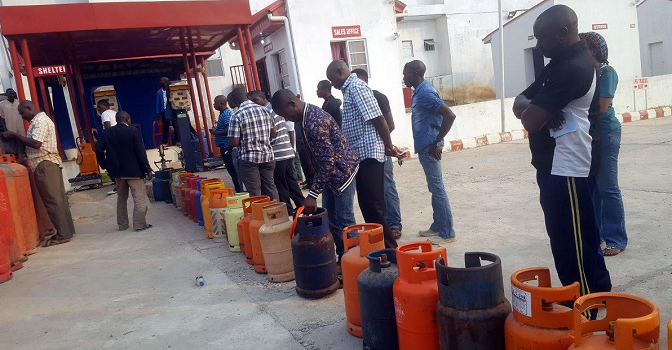
In Nigeria, cooking gas retailers are attributing the recent scarcity and hike in prices to broader supply chain challenges, rather than manipulation on their part. The Nigerian Association of Liquefied Petroleum Gas Marketers (NALPGAM) and other industry stakeholders have stated that the crisis is a result of a combination of factors.
The primary reason cited for the recent disruptions is a strike by the Petroleum and Natural Gas Senior Staff Association of Nigeria (PENGASSAN) against the Dangote Refinery in early October 2025. According to the Nigerian National Petroleum Company Limited (NNPCL), this industrial action halted loading and distribution for several days, creating an “artificial” shortage.
The PENGASSAN strike reportedly disrupted supply from a key domestic source, the Dangote Refinery, which had been supplying about 50 trucks of LPG daily, primarily to the southwestern and northern parts of the country. With this supply line cut off, marketers turned to other depots, such as those in Apapa, which quickly became dry. The strike also prevented a vessel from berthing and discharging its product, causing further delays and a backlog in the supply chain.
While the strike has been called off and supply is gradually resuming, the backlog has led to continued scarcity, particularly in the South-West, which consumes the largest share of LPG in Nigeria. Retailers argue that this supply-demand imbalance has forced them to buy at higher costs from a limited pool, which in turn leads to the high retail prices consumers are currently paying.
The retailers’ association has pushed back against accusations of price manipulation, stating that their operations are limited to buying from plant owners and selling to end-users. They claim that if plant owners and primary off-takers increase prices, retailers have no choice but to adjust theirs to avoid selling at a loss.
In addition to the strike, other factors contributing to the unstable market include:
- Increased Demand: Nigeria’s national LPG consumption has surged, straining the supply chain even when there are no disruptions.
- Logistical Challenges: High transport costs, inadequate storage capacity, and security concerns in some parts of the country further contribute to the high price of cooking gas, especially in northern regions.
- Market Forces: NALPGAM has acknowledged that some opportunistic marketers may be taking advantage of the temporary shortage to inflate prices, but they maintain that this is not a widespread practice.
The current situation is particularly challenging for Nigerian households already facing economic hardship. Many have been forced to ration their gas or switch to less safe and clean alternatives like charcoal and firewood.

