


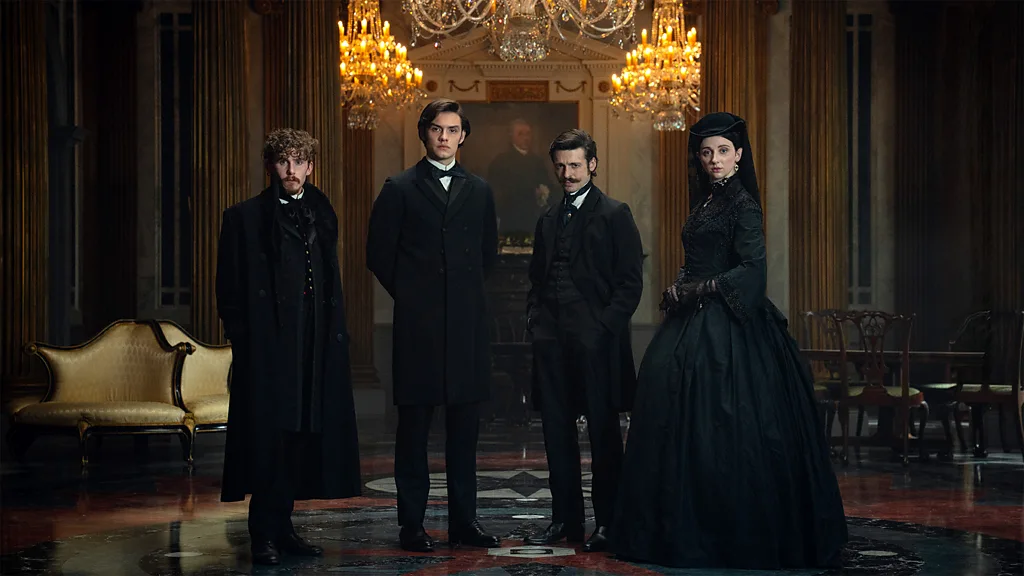
The latest show from Peaky Blinders creator Steven Knight tells the thrilling story of brewing dynasty the Guinnesses – and was devised by Guinness descendant Ivana Lowell, laying bare her ancestors’ rivalries, scandals, secrets and tragedies.
Ivana Lowell was in Ireland for a family gathering at Castletown, the Palladian mansion restored by her cousin Desmond Guinness in County Kildare, when inspiration struck. She and others were watching, in a desultory way, an episode of Downton Abbey on television. The sight of the fictional Crawleys throwing polite barbs at each other across the dining table made Lowell realise something. “Our family history was a lot juicier and more interesting than this – plus it was all true,” she tells the BBC from her airy East Hampton dining room.
When she returned home to Long Island in New York, she sat down and wrote a 20-page television treatment, a dramatic retelling of the triumphs and travails of her clan, descendants of Arthur Guinness (born 1725), who first brewed the famous Irish stout beer which now sells over 10 million glasses a day around the world. Fast-forward a decade, and Lowell’s concept has been brought to life by the acclaimed TV writer and director Steven Knight, best known for Peaky Blinders. Eight episodes of House of Guinness will drop on Netflix on 25 September, with a prominent call-out in the credits: “Based on an idea by Ivana Lowell.”
Lowell – whose mother was the novelist Lady Caroline Blackwood, and whose grandmother, Maureen, Marchioness of Dufferin and Ava, was one of the trio of “golden Guinness girls”, well-known in British high society in the 1920s – concedes that the epic story wasn’t a simple one to tell. It sprawls over six generations and involves remarkable commercial success, a rich philanthropic legacy plus political intriguing, along with numerous family rivalries, scandals, secrets and tragedies.
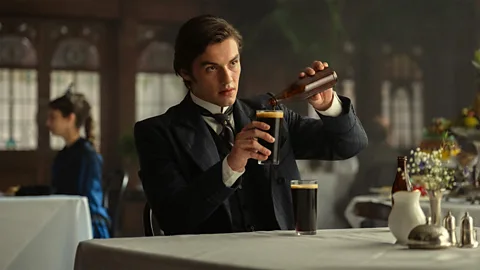
She began her treatment by addressing the mythical origin story of Guinness dark stout, as an accidental burning of the hops. In truth, founder Arthur most likely landed upon with his winning stout formula deliberately, allowing darker malt beer to mature in wooden vats, deepening its flavor.
For the TV series, Knight plucked from Lowell’s storyline a later kick-off point: the death of Benjamin Guinness, the founder’s grandson, who died in 1868, leaving behind four children. He’d built the brewery established by Arthur at St James Gate in Dublin into one of the largest in the world, and the Guinness family counted among Ireland’s wealthiest citizens.
They were all so young, and their father left them both huge responsibility and a huge legacy – each was forced to find a path – Ivana Lowell
The plot will remind some viewers of Succession, the HBO hit loosely based on media mogul Rupert Murdoch’s relationship with his four oldest children. As in that tale, wealthy progeny jockey amongst themselves, but in House of Guinness the heirs must cope with the posthumous wishes of their patriarch, plus conditions in 19th-Century Ireland – a vocal temperance movement and political tumult fuelled by the dominance of the prosperous Protestant elite, to which the family belonged, over the impoverished Catholic majority.
“They were all so young, and their father left them both huge responsibility and a huge legacy,” Lowell says of her four main characters. “Each was forced to find a path.” As a woman, Anne, the sole daughter, inherited only a nominal amount, but committed herself to tapping family funds to improve the lives of the poor and sick in Dublin, and elsewhere in Ireland. Son Benjamin was also denied a large fortune, regarded by the elder Benjamin as a drunk, too weak to lead the family.
Eldest son Arthur expected that the role to be given to him, and that he’d enjoy a free hand with his controlling interest in the brewery, only to learn at the reading of his father’s will that he would be compelled to share ownership with his clever but dour brother Edward. The complicated partnership of these two brothers – opposites, yoked together and frequently resentful of one another – forms the dramatic heart of House of Guinness.
Just as Steven Knight had been inspired to make Peaky Blinders by his parents’ stories of their childhoods in gang-ridden Birmingham, Knight discovered the creative wellspring required to undertake House of Guinness after speaking with Lowell. “Ivana is an absolute mine of information and untold stories about the family going back years,” he says in the press notes for the show. “Meeting her was the best bit of research imaginable because you didn’t just get the stories, you got the [family] confidence, and the spirit and the slight madness… I was hooked.”
How to find the right tone? I didn’t want them to be villains, but any business person has to be ruthless, especially in those times – Ivana Lowell
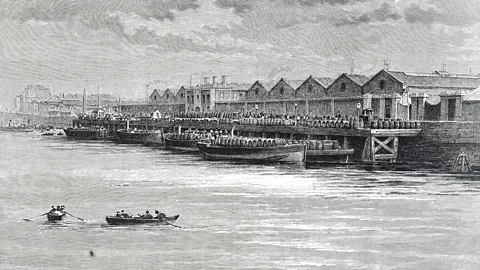
House of Guinness concerns a family in trade – successful yes, but determined to use whatever means necessary to further expand their enterprise and harness a large workforce. Most of the action takes place in Ireland (the Liverpool docks acting as stand-in for the St James Gate brewery) with a handful of scenes in New York, where a Guinness cousin is sent to pursue international growth. The Fenians, Irish revolutionaries bent on armed struggle to free Ireland from Britain, are seen targeting Guinness interests, as they did in real life, although the company was known for treating workers well, providing higher than average wages and old-age pensions. Edward Guinness, later Earl of Iveagh, once remarked: “You cannot make money from people unless you are willing for people to make money from you.”
The action unfurls in the giant brewery’s grimy precincts, the ballrooms and mansions of Dublin, and the depopulated Irish countryside, where, two decades after the famine, anyone who hasn’t already “left for Boston”, as one character reports, lives in a sod-roofed hovel. A love of Ireland and the Irish is part of the privileged family’s legacy, but Lowell’s story focuses on how they walked a tightrope at a fraught moment in history, and connived to flourish both commercially and personally. She explains to the BBC: “How to find the right tone? I didn’t want them to be villains, but any business person has to be ruthless, especially in those times.”
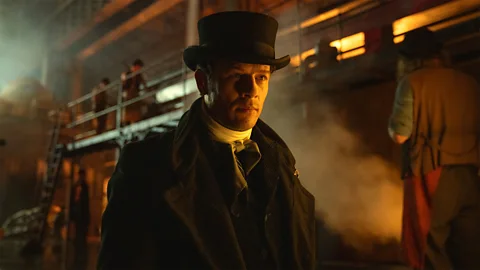
A key decision, one that provided “the conflict and the passion that makes a story interesting,” she added, was to invent a character, the hunky brewery foreman, Sean Rafferty. Played by James Norton with wicked, sexy flair, Rafferty acts as the ruthless family fixer, who for all his cunning and loyal service to the Guinnesses (especially the women) is never allowed to forget he’s their servant, not their equal.
Growing up in the Guinness family
While Lowell, now 58, had no training in the writing of fiction or for television, she believes long stretches during childhood spent in under-heated, isolated mansions in Ireland and England, without a TV, proved valuable. “Telling stories was how we entertained ourselves,” she recalls. She grew up with two older sisters, Natalya and Evgenia Citkowitz, and a younger brother, Sheridan Lowell. She watched her mother and her stepfather, the US poet Robert Lowell, dedicate their days to writing. Not that it held much appeal to her then: “It struck me as boring to be shut off in your own world all the time.”
Lowell’s early life was punctuated by loss – her stepfather, Robert, suffered a sudden fatal heart attack, and her sister Natalya died of a heroin overdose aged 18. Lady Caroline, an alcoholic and often inattentive mother, neglected to tell Lowell the truth about her parentage. Lowell assumed that her father was her mother’s second husband, the composer Israel Citkowitz, until a friend, a day after Lady Caroline died in 1996, cast doubt on that.
We are not high and mighty about our reputation, we have a very good sense of humour about ourselves – Ivana Lowell
Lowell learned that her mother had led two men to believe that they could be her father: Robert Silvers, long-time editor of the New York Review of Books, with whom Lowell had a fond relationship, and Ivan Moffat, a movie producer and screenwriter, about whom she did not feel as warmly. A DNA test eventually confirmed that she was Moffat’s daughter. Lowell described this odyssey of discovery in her eloquent, at times harrowing, memoir Why Not Say What Happened. To coincide with the release of House of Guinness, the memoir, originally published in 2010, will be reissued this autumn by Vintage in the US and by Bloomsbury in the UK.
Writing, in her opinion, is no easier for those with literary parents than those who lack them. “When I read all my mother’s work, finally, as an adult, I saw she was good. And I’ve read Giant” – the 1956 screenplay co-written by Moffat – “and it’s good. Inevitably there was some fear,” she admits.
That Knight saw something in the story she devised was a great thrill for her, and the resulting television series is most definitely not a costume drama in the mode of Downton Abbey – it’s a noisy, fast-paced production filled with nefarious goings-on, and in many ways resembles Peaky Blinders. Lowell praises Knight’s deft juggling of the political plotline with the story of the two brothers, played by Anthony Boyle as Arthur and Louis Partridge as Edward. “And the one-liners he gave to Arthur are brilliant,” she adds.
All this is a relief to Lowell, who worried only about disappointing her large tribe of Guinness cousins – including Daphne Guinness, the fashion designer and actress, and writer Ned Iveagh, the 4th Earl of Iveagh. She felt sure they wouldn’t mind the airing of family dirty laundry: “We are not high and mighty about our reputation, we have a very good sense of humour about ourselves,” she said. But a show that turned out to be “fluffy nonsense” wouldn’t go down well.
No danger there. Like the dark beer that for so long was synonymous with Irish pubs and older men, and yet now enjoys fresh popularity among the young, this Guinness story has an energy, and a soundtrack, that is anything but staid. Plenty of people will happily gulp it down.
House of Guinness is on Netflix from 25 September.

