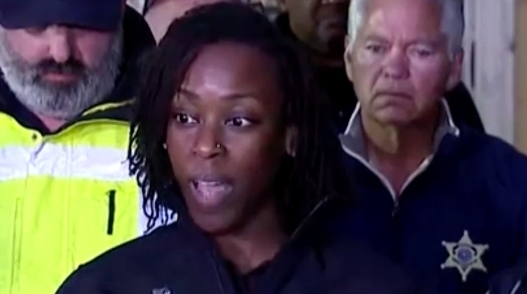


The Federal Bureau of Investigation (FBI) has not yet commented on whether any disciplinary action will be taken against the agent who prematurely informed the media and the public that the shocking attack in New Orleans on New Year’s Day was “not a terrorist event.” Despite the widespread attention and concern surrounding the incident, the FBI has maintained its silence on the matter, leaving many to question whether the agent will face any consequences, such as dismissal or other forms of disciplinary measures, for the statement.
The incident in question has stirred significant public and media scrutiny due to its severity and the potential implications of labeling—or mislabeling—it as a terrorist act. On the day of the attack, an FBI agent reportedly assured the public that the event was not connected to terrorism, a statement that seemed intended to reassure citizens and prevent panic. However, as more details about the attack have emerged, questions have arisen regarding the accuracy of this initial assessment and whether it was made prematurely without sufficient investigation.
Critics argue that the agent’s statement may have undermined public trust in law enforcement’s ability to assess and respond to such events appropriately. By declaring the attack unrelated to terrorism before a thorough investigation was completed, the FBI may have inadvertently downplayed the seriousness of the situation or misled the public. This has led to growing calls for accountability, with some demanding a transparent review of the agent’s actions and the decision-making process behind the statement.
The FBI’s decision to remain silent on the matter has only fueled speculation and frustration. Some observers believe that the lack of clarity reflects internal deliberations within the agency about how to address the controversy. Others suggest that the FBI may be seeking to avoid drawing further attention to the incident or the agent’s role in it, preferring instead to focus on the ongoing investigation into the attack itself.
It is worth noting that the FBI, as a federal law enforcement agency, operates under strict protocols when it comes to communicating with the public about sensitive incidents. Agents are typically expected to base their statements on verified information to avoid creating confusion or spreading misinformation. When these protocols are not followed, it can have serious implications for the agency’s credibility and the public’s confidence in its work.
The debate over whether the agent should face consequences also raises broader questions about accountability within the FBI and other law enforcement agencies. While some argue that mistakes like this are inevitable in high-pressure situations and should be addressed through training and internal review, others contend that public-facing errors warrant more tangible repercussions, such as suspension or termination, to reinforce the importance of accuracy and accountability.
As of now, the FBI has neither confirmed nor denied whether the agent’s actions are under review. The agency has also not disclosed whether any changes will be made to its procedures for assessing and communicating information about incidents that might be classified as terrorist events. This continued silence has left the public and media speculating about the potential outcomes and the broader implications for how law enforcement agencies handle public communication in times of crisis.
The New Year’s Day attack in New Orleans remains a deeply concerning event, and its impact continues to resonate within the community and beyond. The FBI’s handling of the situation, particularly the agent’s statement and the subsequent silence, highlights the challenges law enforcement agencies face when balancing the need for transparency with the imperative to avoid premature conclusions. Until the FBI provides a clearer response, the questions surrounding this case and the agent’s future within the agency will likely persist, keeping the issue in the public eye.
FBI Holds Tight on Disciplining Agent Who Labeled New Orleans New Year’s Attack as Non-Terrorist