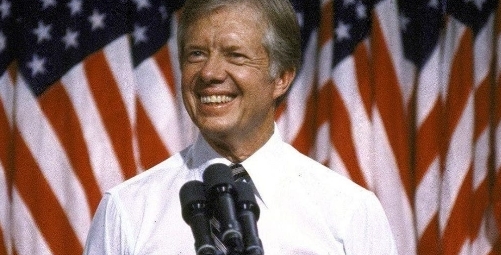


Jimmy Carter, the 39th president of the United States, passed away at the age of 100 on Sunday, at his home in Plains, Georgia, as confirmed by the Carter Center. Known for his humble beginnings as a peanut farmer, Carter’s rise to the highest office in the land was driven by his vision for a “competent and compassionate” government—an ideal that resonated deeply with the American public during his campaign. His death marks the end of a century-long life defined by an unwavering commitment to service, both in the political arena and in humanitarian efforts across the globe.
Born in 1924 in the small town of Plains, Georgia, Carter was a man shaped by the rural and modest circumstances of his upbringing. His early years as a farmer on his family’s land provided him with a unique perspective on hard work, integrity, and the importance of community, values he would carry with him throughout his life. Carter’s modest beginnings seemed to influence his political philosophy, one that emphasized empathy, fairness, and the need for government to serve the people with transparency and efficiency.
Carter’s presidential campaign in 1976 was built around the promise of restoring integrity to the White House after the Watergate scandal had left the public disillusioned with government. He ran on a platform of honesty, humility, and reform, positioning himself as an outsider who would challenge the status quo of American politics. His vision for a government that was not only effective but also compassionate, focused on the needs of the people, resonated with a nation in need of healing.
Once in office, Carter faced an array of challenges, both domestically and internationally. His presidency was marked by efforts to address the energy crisis, economic stagnation, and inflation, as well as the ongoing Cold War tensions. One of his most significant achievements, however, was his role in brokering the Camp David Accords in 1978, which led to a historic peace agreement between Egypt and Israel. This accomplishment, considered a cornerstone of Carter’s legacy, highlighted his dedication to diplomacy and peacebuilding. It earned him the Nobel Peace Prize in 2002, recognizing his lifelong efforts to promote human rights, conflict resolution, and global cooperation.
Despite facing numerous challenges during his presidency, Carter’s post-presidential years arguably solidified his place as one of the most respected former presidents in history. After leaving office, Carter remained a tireless advocate for social justice, human rights, and global health. He founded the Carter Center, a nonprofit organization dedicated to improving global health and promoting peace. Through the Carter Center, he worked to eliminate diseases like Guinea worm disease, advocate for fair elections, and support initiatives for conflict resolution around the world.
Carter’s post-presidential work also took him to places where few other public figures dared to go, including conflict zones and developing countries, where he worked to mediate peace and address issues of poverty, disease, and inequality. His commitment to improving lives, particularly in impoverished regions, was driven by a deep sense of moral responsibility that never wavered, even as he aged.
Known for his humility and kindness, Carter remained active in his later years, continuing to speak out on important issues, including climate change, the need for affordable healthcare, and political polarization. Even at the age of 100, he maintained his belief that people could make a difference in the world through service and dedication.
Carter’s death marks the loss of a leader who, though often underestimated during his presidency, became a symbol of integrity, compassion, and commitment to making the world a better place. He was admired for his ability to confront difficult challenges with grace, and his enduring legacy continues to inspire individuals around the world. The Carter Center, the organization he founded, stands as a testament to his lifelong dedication to humanitarian work, ensuring that his vision for a more just and compassionate world will continue long after his passing.
As the nation reflects on Carter’s remarkable life and legacy, it will undoubtedly continue to honor his contributions to peace, human rights, and the pursuit of a government that serves its people with both competence and compassion.
“Remembering Jimmy Carter: The 39th President’s Legacy of Compassion, Integrity, and Global Service”