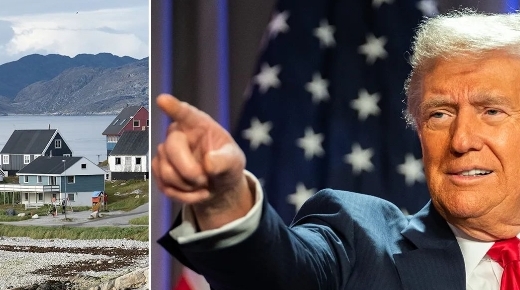


Greenland’s Prime Minister, Múte Egede, has made a bold and definitive statement about the island’s future, emphasizing the need to pursue greater independence from Denmark. In a recent address, Egede highlighted that taking substantial steps toward self-determination is not only a long-term aspiration but also an essential and immediate priority for Greenland. His remarks mark a significant moment in Greenland’s ongoing journey to establish itself as a fully autonomous nation on the global stage.
Egede’s push for independence aligns with growing sentiments among Greenlanders, who have long expressed a desire to control their own political and economic destiny. While Greenland, an autonomous territory, has governed many of its domestic affairs since gaining home rule in 1979, Denmark still oversees key areas such as foreign policy, defense, and monetary policy. This arrangement has often been a source of contention for those who believe that Greenland’s reliance on Denmark is holding back its potential for development and self-reliance.
In his New Year’s address, Egede underscored the importance of Greenland taking charge of its own future. He argued that independence is necessary to allow the nation to establish direct relationships with the international community, unencumbered by the oversight and limitations imposed by Denmark. The Prime Minister’s comments reflect a growing consensus among Greenlandic leaders and citizens that self-determination is essential for the island to achieve its full potential.
Egede’s declaration comes at a time when Greenland is navigating a unique set of challenges and opportunities. The island, known for its vast ice sheets and breathtaking landscapes, is also home to some of the world’s most valuable natural resources. As climate change continues to melt Arctic ice, previously inaccessible mineral deposits and fishing grounds are becoming more accessible, creating new economic possibilities. However, this also brings environmental concerns and complex geopolitical dynamics, as global powers increasingly view the Arctic as a region of strategic importance.
The Prime Minister’s vision for independence also coincides with a renewed interest in Greenland from the United States. Former President Donald Trump famously proposed purchasing the island during his first term, a suggestion that was met with widespread disbelief and rejection by both Denmark and Greenland. Despite the initial backlash, Trump’s administration continued to express interest in Greenland’s strategic location and resources, leading to heightened U.S. involvement in the region.
Egede’s recent comments can be seen as a response to these external pressures. By advocating for independence, he is asserting Greenland’s right to chart its own course without external interference. This includes the ability to engage in direct negotiations with other nations and participate in international forums as an equal partner. For many Greenlanders, the prospect of independence represents an opportunity to protect their culture, language, and way of life while also taking advantage of the economic opportunities presented by their unique geographic position.
However, the path to independence is fraught with challenges. Greenland remains heavily reliant on financial subsidies from Denmark, which account for a significant portion of its budget. Achieving economic self-sufficiency is a critical step toward independence, and this will require significant investments in infrastructure, education, and industry. Greenland’s economy is currently dominated by fishing, which accounts for more than 90% of its exports, leaving it vulnerable to fluctuations in global markets. Diversifying the economy and developing other sectors, such as tourism and mineral extraction, will be key to reducing reliance on Danish support.
In addition to economic hurdles, there are also political and social considerations. A transition to independence would require careful planning and negotiation with Denmark, as well as broad support from the Greenlandic population. While polls suggest that many Greenlanders favor independence in principle, there is also recognition of the practical challenges involved. Ensuring that independence leads to a better quality of life for all citizens will be a complex and delicate process.
Despite these obstacles, Prime Minister Egede remains steadfast in his commitment to pursuing independence. His leadership reflects a broader movement within Greenland to take control of its destiny and assert its place on the global stage. For Egede and his supporters, independence is not merely a symbolic goal but a practical necessity for ensuring the long-term prosperity and sustainability of the nation.
As Greenland continues to navigate this critical juncture in its history, the island’s future remains uncertain but full of potential. The journey toward independence will undoubtedly be challenging, but it also represents an opportunity for Greenland to define itself on its own terms. With strong leadership and a clear vision, Egede’s call for self-determination could mark the beginning of a new chapter for this Arctic nation.
“Greenland PM Múte Egede Calls for Bold Steps Toward Independence from Denmark”