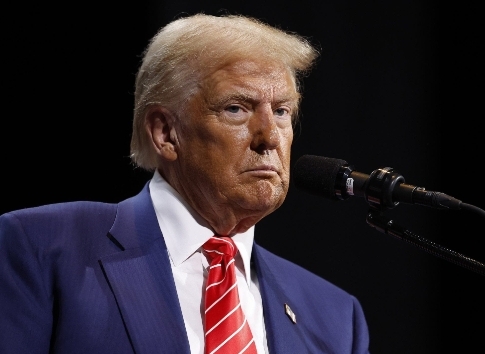


President-elect Donald Trump’s legal efforts to have his conviction in the New York criminal hush money case overturned were met with a significant setback on Friday. The request to vacate the verdict was denied by New York Judge Juan Merchan, who ruled against Trump’s argument that his conviction should be dismissed based on the U.S. Supreme Court’s decision regarding presidential immunity. The case, which centers around Trump’s involvement in payments made to silence allegations of extramarital affairs during the 2016 presidential campaign, continues to be a source of controversy and legal battles for the president-elect as he approaches his second term.
Judge Merchan’s decision to reject Trump’s request is a crucial development in the ongoing legal saga surrounding the former president. Trump’s defense team had argued that his actions should be immune from prosecution due to the protections afforded to sitting presidents under the Constitution. They cited the Supreme Court’s ruling on presidential immunity in past cases, including the 1997 case Clinton v. Jones, which suggested that a sitting president cannot be sued for actions taken while in office. However, Judge Merchan dismissed this argument, stating that Trump was not acting in his official capacity as president when the alleged hush money payments were made. The judge clarified that the payments occurred during Trump’s campaign for the presidency and not in the course of his duties as the sitting commander-in-chief.
The decision by Judge Merchan effectively means that Trump will face sentencing in the criminal case, which stems from his involvement in paying hush money to adult film actress Stormy Daniels and former Playboy model Karen McDougal during the 2016 election. Both women claimed to have had affairs with Trump prior to his candidacy, and the payments were made to prevent them from publicly discussing the alleged encounters. The case raised questions about whether these payments constituted an illegal attempt to influence the election by suppressing potentially damaging information.
Despite the legal blow, Trump’s defense team maintains that the charges are politically motivated and that he did not commit any crimes. They argue that the payments were part of a broader strategy to protect his personal reputation rather than to influence the election outcome. Trump himself has repeatedly denied any wrongdoing and has portrayed the case as a witch hunt orchestrated by his political opponents. He has also argued that the charges against him are part of a broader pattern of legal attacks designed to prevent him from running for president again.
As the case continues to unfold, attention is turning to the upcoming sentencing, which is scheduled for January 10 at 9:30 a.m. Judge Merchan has indicated that he will not be sentencing Trump to prison, a decision that is likely to be seen as a significant concession in a case that has attracted intense public and media scrutiny. The prospect of prison time had loomed large over the case, as many believed that a conviction could lead to a lengthy sentence. However, with Merchan’s announcement that prison is off the table, Trump’s legal team may focus their efforts on minimizing any other potential penalties, such as fines or community service requirements.
Trump has been given the option to appear in person for the sentencing, but he may choose to attend virtually, as has been the case with other high-profile legal proceedings involving public figures. The decision to appear remotely reflects the ongoing challenges posed by the COVID-19 pandemic and the increased use of virtual platforms for legal proceedings. Regardless of how Trump chooses to participate in the sentencing, the case is likely to remain a focal point in the media, as it is one of several legal challenges the former president is facing as he prepares for his political comeback.
The criminal case is just one aspect of Trump’s broader legal entanglements. He is also facing investigations into his role in the January 6 Capitol riot, as well as lawsuits related to his business practices and the handling of classified documents. These ongoing legal battles are complicating Trump’s efforts to maintain his political influence and pursue another run for the White House in 2024. Despite the legal hurdles, Trump continues to enjoy significant support among his base, and many of his followers view these cases as part of a coordinated effort by the political establishment to undermine his candidacy.
As Trump’s legal team prepares for the January 10 sentencing, all eyes will be on the judge’s final ruling and the potential consequences for the former president. While the prospect of prison time has been ruled out, the case will continue to have a significant impact on Trump’s public image and political future. As he faces mounting legal challenges, Trump’s legal strategy and the broader implications of the case will be closely watched by both his supporters and his critics. The outcome of this case, along with the many other legal battles Trump is facing, will play a crucial role in shaping his political career and his legacy as a former president.
“Judge Denies Trump’s Request to Overturn Hush Money Conviction, Sentencing Set for January 10”