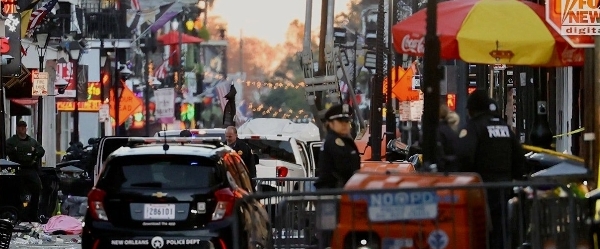


Tragedy struck New Orleans on New Year’s Day 2025, as a driver deliberately drove a pickup truck into a crowded area of revelers celebrating the holiday on Bourbon Street. The devastating incident resulted in the deaths of at least 10 people, with dozens more injured. The horrifying attack left the city in shock and raised concerns over public safety and potential terror threats.
The driver of the pickup truck, later identified as Shamsud-Din Jabbar, carried out the attack on one of the busiest and most iconic streets in New Orleans, which was teeming with people ringing in the new year. This historic area, known for its vibrant nightlife, was packed with partygoers from all over the world. As the crowd reveled in the festivities, Jabbar’s vehicle barreled through, mowing down anyone in its path.
The impact was catastrophic. People who had been joyously celebrating with friends and family were suddenly thrust into a nightmare. Screams filled the air as bodies were thrown into the streets, and the chaos that followed was described as nothing short of horrific. First responders arrived at the scene within minutes, quickly working to tend to the injured and transport them to nearby hospitals. Emergency medical teams faced an overwhelming number of casualties, some critically injured, as they scrambled to provide life-saving treatment.
Law enforcement officials soon identified Jabbar as the driver behind the attack. His actions raised immediate questions regarding his motives and the potential for a larger, more coordinated plan. Investigators later revealed disturbing details that painted a grim picture of Jabbar’s background. The vehicle he used for the attack had crossed the U.S.-Mexico border just days before the tragic event took place. This discovery sparked fears that the attack might have been part of a broader terrorist plot. Authorities were left scrambling to determine whether Jabbar acted alone or was part of a larger network of individuals with similar intentions.
The fact that the pickup truck crossed the border into Texas raised additional alarms. Investigators began to scrutinize Jabbar’s movements and any possible connections he might have had in both the United States and Mexico. Surveillance footage and border records were examined, revealing that Jabbar had entered the country legally, but with little indication of what his true intentions were at the time. There was no immediate indication that he had been flagged for suspicious activity, leaving law enforcement agencies questioning how someone like Jabbar could carry out such a heinous act without attracting prior attention.
As the investigation continued, it became clear that Jabbar’s actions were not a random act of violence. Evidence found at his home pointed to a disturbing premeditation. Authorities uncovered a stash of precursor chemicals, suggesting that Jabbar had been preparing for something far more catastrophic than the attack on Bourbon Street. These chemicals are often associated with the production of explosives, and their presence fueled suspicions that Jabbar’s goal may have been to carry out a much larger bombing or series of attacks. The discovery of these materials prompted authorities to ramp up their efforts, both in the investigation of Jabbar’s past actions and in preventing further attacks.
Meanwhile, the city of New Orleans grappled with the aftermath of the attack. Local authorities, alongside federal agencies, focused on providing support to the families of the victims and those affected by the tragedy. City leaders pledged to ensure that security measures would be tightened in the future, particularly during large gatherings and public events. While the loss of life was devastating, local officials and first responders were praised for their swift actions, which undoubtedly saved many lives.
The attack on Bourbon Street served as a stark reminder of the threat posed by individuals who may be radicalized or motivated by extremist ideologies. It raised serious questions about the vulnerabilities in public safety, particularly in crowded environments where large gatherings are common. With the discovery of Jabbar’s background and the disturbing evidence found at his home, authorities are left facing the daunting task of uncovering the full scope of the plot he may have been part of. The tragedy has shaken not just New Orleans but the entire nation, as citizens and officials alike remain vigilant in the face of an unpredictable and ever-present threat.
“Tragedy on Bourbon Street: Driver Kills 10 and Injures Dozens in New Year’s Attack; Vehicle Tracked from U.S.-Mexico Border”