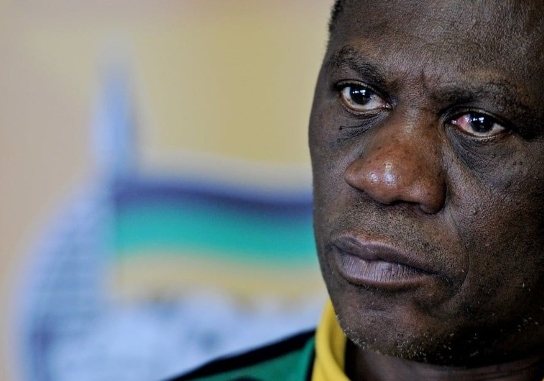


During Deputy President Paul Mashatile’s visit to Khayelitsha on Tuesday, an unexpected confrontation unfolded, leading to chaotic scenes that overshadowed the purpose of his trip. The incident took place in a home belonging to a local family, where Mashatile, along with his entourage, had arrived as part of a community engagement initiative. The situation became tense when a resident, identified as Mabhuti, openly demanded that the Deputy President and his team leave his mother’s house.
Mabhuti, visibly frustrated and holding a child in his arms, confronted Mashatile’s security personnel, accusing them of disrespecting his family. According to Mabhuti, the security detail had prevented him from entering his own home, sparking outrage and a sense of humiliation. This action by the security team seemed to have been the catalyst for the escalating confrontation.
As Mabhuti entered the house, he made it clear that he felt neither welcomed nor consulted about the Deputy President’s visit to their home. Reports suggest that he was angered by the fact that his personal space and that of his family had been invaded without proper communication or acknowledgment of their rights as residents. His frustration was compounded by what he perceived as the heavy-handedness of the security personnel accompanying Mashatile.
During the heated exchange, Mabhuti insisted that the Deputy President and everyone associated with him vacate the house immediately. “All of you must leave,” he reportedly demanded, making it evident that he was unwilling to tolerate the disruption any longer. The presence of the child in his arms added to the emotional gravity of the moment, underscoring his protective instincts as a father.
Eyewitnesses described the scene as chaotic, with family members stepping in to de-escalate the situation. Tensions were high as emotions flared, but the intervention of relatives helped to prevent the confrontation from spiraling further out of control. Despite the initial resistance, Mabhuti’s strong stance served as a reminder of the importance of respecting individual and community boundaries, even during high-profile visits by government officials.
Deputy President Mashatile responded to the incident with an apology, acknowledging the misunderstanding and expressing regret over the actions of his security team. He explained that the measures taken by his security detail were part of their standard protocol, aimed at ensuring his safety. However, he admitted that these protocols might have unintentionally caused offense to the family, particularly Mabhuti. Mashatile’s apology was seen as an attempt to mend the strained relationship and reaffirm his commitment to engaging with communities respectfully.
The incident raises broader questions about the balance between security considerations and community engagement. Visits by high-ranking officials are often accompanied by tight security measures, which can sometimes alienate the very communities they aim to connect with. In this case, Mabhuti’s reaction highlights the importance of clear communication and mutual respect in fostering trust and cooperation between public officials and the people they serve.
Additionally, the confrontation shed light on the underlying frustrations of ordinary South Africans who feel overlooked or disrespected by those in power. Mabhuti’s actions can be seen as a symbolic expression of these grievances, calling for greater accountability and sensitivity from leaders. His insistence that his mother’s house should not be treated as a mere backdrop for political visits resonates with many citizens who value the sanctity of their personal space.
Despite the tense nature of the encounter, the incident also served as a moment of reflection for all parties involved. For Mashatile, it was a reminder of the importance of humility and empathy in leadership. For Mabhuti and his family, it was an assertion of their dignity and their right to be treated with respect, regardless of the status of their visitors.
In the aftermath of the event, both the Deputy President’s office and community leaders in Khayelitsha emphasized the need for open dialogue and reconciliation. They expressed hope that the incident would lead to greater awareness and improved protocols for future engagements.
Ultimately, this confrontation serves as a poignant example of the complexities and challenges of leadership in a diverse and dynamic society. It underscores the necessity for public officials to approach community interactions with care, sensitivity, and an unwavering commitment to the values of respect and inclusivity.
“Chaos in Khayelitsha: Deputy President Mashatile Confronted by Resident Demanding Respect”